Questo sito utilizza i cookie per una migliore esperienza utente e analisi.
Discover the science of red light therapy and how it can achieve your health & fitness goals.
What Is Red Light Therapy?
💡 Essence
⚙ Core Mechanism
🔬 Device & Parameters
Non-Invasive Physical Therapy
A red light therapy lamp is not an ordinary lighting fixture. Its medical basis is "photobiomodulation." It uses low-energy light of specific wavelengths (typically red light at 620–700nm and near-infrared light at 700–1440nm) to irradiate tissue without generating heat and without damaging DNA the way ultraviolet light does.
Targeting Mitochondria to Regulate Cellular Energy Metabolism
When specific red-light wavelengths penetrate the skin and are absorbed by mitochondria, they trigger molecular changes—boosting ATP production, transiently modulating reactive oxygen species, and influencing intracellular calcium levels. These changes activate signaling pathways that ultimately drive cell proliferation, migration, and repair. In short, red light therapy targets the cell's "power plant," influencing cell behavior by regulating energy supply.
Device Forms and Key Parameters
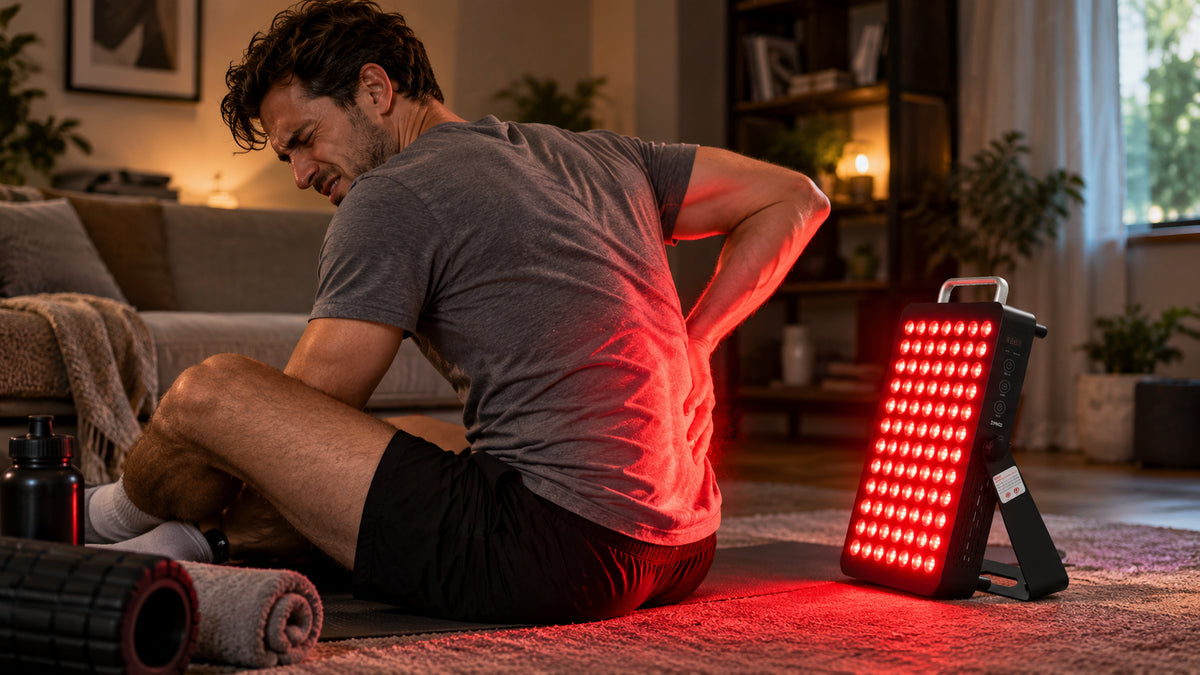
Red light therapy lamps typically use LEDs or low-level lasers as light sources. Wavelength is the core parameter, as different wavelengths have different penetration depths and target tissues. Common forms include panels, handheld wands, and masks—but essentially, they are all emission carriers for photons of specific wavelengths, used under precise dosage control (energy density, irradiation time).
How does it work?
660nm
Visible Red Light
Falls within the red light spectrum; it has low energy and limited penetration, acting primarily on the surface layers of the skin to support skin repair, promoterecovery, and help improve overall skin appearance.
850nm
Invisible Red Light
With greater reach, capable of reaching deeper tissues 5–10 mm beneath the skin surface, muscles and joints to help promote circulation and support faster recovery.
660nm+850nm
Visible Red Light
By leveraging the different penetration depths of two distinct wavelengths, a synergistic coverage of both superficial and deep tissues is achieved, thereby generating a more comprehensive biostimulatory effect at the cellular level than could be attained with a single wavelength.
What are the benefits of red light therapy?
Skin Repair & Anti-Aging
Skin Repair & Anti-Aging
Penetrates to the dermal layer, stimulating the production of collagen and elastic fibers to improve skin laxity and fine lines.
Inflammation Control
Inflammation Control
Reduces inflammatory response by inhibiting the expression of prostaglandins and interleukins.
Accelerate Wound Healing
Accelerate Wound Healing
Promote cell proliferation and collagen synthesis, which can speed up the wound healing process.
Muscle Recovery Support
Muscle Recovery Support
Delays skeletal muscle fatigue, accelerates post-exercise lactic acid metabolism, and boosts energy levels.
Immune Regulation & Energy Enhancement
Immune Regulation & Energy Enhancement
Enhances the activity of C3b receptors on red blood cells and increases the lymphocyte transformation rate, while simultaneously promoting mitochondrial ATP synthesis to supply energy to cells.
Sleep and Metabolic Improvement
Sleep and Metabolic Improvement
Regulates melatonin secretion to improve sleep quality, promotes local microcirculation, and alleviates fatigue.
" Got this device to help with my arthritis, and it's done wonders. It's way cheaper than going to a professional and works just as well! Don't hesitate to try it out. "
Moriah
Glowing skin with red light therapy
" I've been using the SANSI Red Light Therapy Lamp for a few weeks now, and I can honestly say it's one of the best welliness investments I've made. The combination of 660nm red light and 850nm near-infrared light feels so soothing on my skin and muscles. I can literally feel the gentle warmth relaxing my body while improving my overall skin tone and glow. "
Ferrari Mauro
Dependable Lighting
" I've been using red light therapy for the past two weeks, and I'm honestly blown away by how much it's helped in such a short amount of time.I originally started using it for muscle soreness and joint stiffness, and I noticed a real difference after just a few sessions. The stiffness in my body has decreased, and I'm recovering faster after workouts. "
Robbie E.
Top-notch tech for athletes
" As a marathon runner, I needed something to help with recovery. This device is seriously legit, using the same tech pros use. My legs feel incredible after each session. "
FAQs
Does Red Light Therapy Really Work?
Research on photobiomodulation suggests that red and near-infrared light may help ease delayed-onset muscle soreness (DOMS) after exercise. This is one reason people include it in their muscle-recovery routines.
What Does Red Light Therapy Do for Your Muscles?
Red light therapy uses specific wavelengths of red and near-infrared light to interact with cellular energy processes. For muscle care, people include it in their post-workout recovery, relaxation, and everyday wellness routines.
How Long Should You Use Red Light Therapy at Home?
For the SANSI 120W panel’s 660nm + 850nm muscle-recovery mode, use 4–8 minutes per area at a distance of 3–6 inches, 3–5 times per week. With consistent use, changes may become noticeable over 2–4 weeks, although experiences vary.
Is Red Light Therapy Safe for Your Eyes?
Avoid staring at the LEDs. Close your eyes or use suitable protective eyewear, particularly for facial sessions, and follow the device instructions.
What's the Difference Between 660nm and 850nm?
660nm is visible red light associated with shallower tissue exposure; 850nm is invisible near-infrared light that can penetrate farther. The two wavelengths are combined in SANSI's dual-chip panel.
Can I Use Red Light Therapy Every Day?
Frequency depends on the application. For 660nm + 850nm muscle recovery, SANSI recommends 3–5 sessions weekly. Its separate 850nm localized body-care guidance lists 1–2 sessions daily.
What Should You Look for in a Red Light Therapy Panel for Home Use?
When choosing a red light therapy panel for home use, look for clearly stated wavelengths, irradiance measured at a specified distance, an adjustable setup, and dependable warranty support. Professional equipment may differ in power, coverage, and operation.