

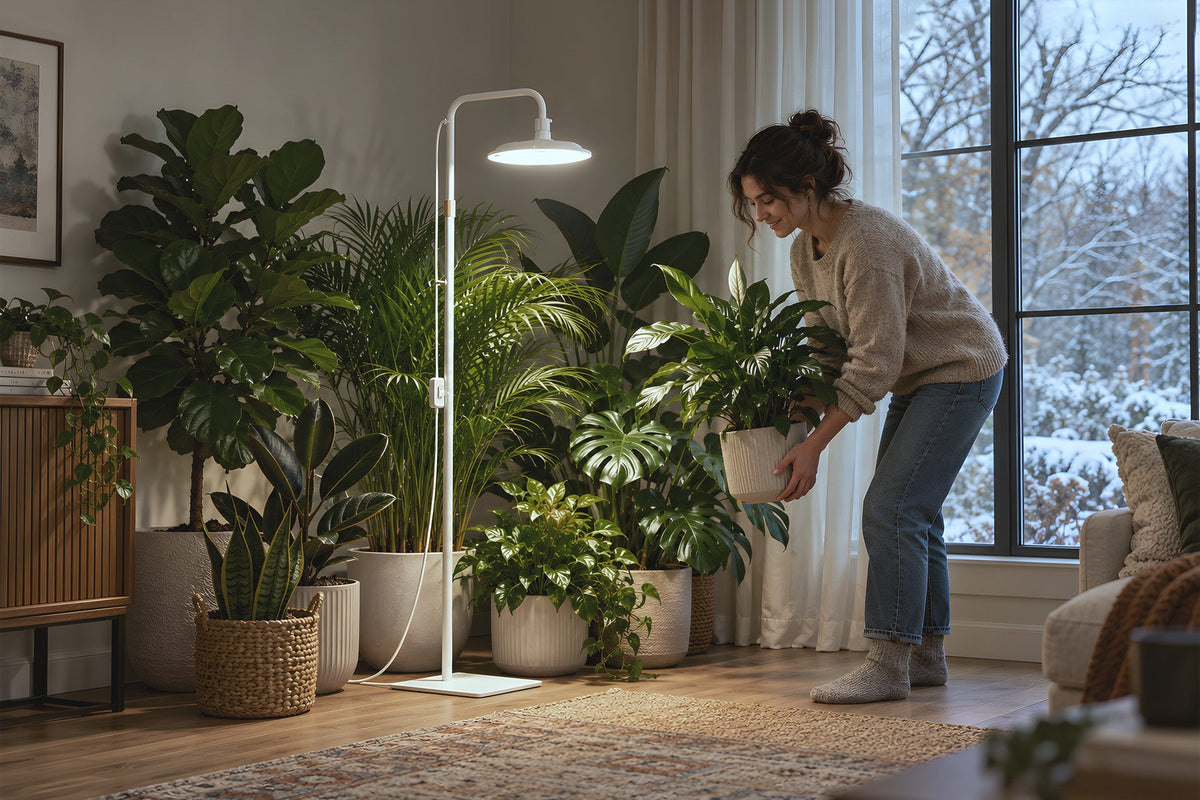
After October, as temperatures continue to drop, people begin bringing their houseplants and flowers back indoors one by one. However, the stark difference between outdoor and indoor environments poses a significant survival challenge for plants, with the sudden drop in light being the primary culprit. Only by mastering the correct timing for bringing plants back indoors, proper transition methods, and supplemental lighting techniques can you ensure your plants survive the winter smoothly and continue to thrive.

Why Do Plants Go into “Shock” as Soon as They’re Brought Indoors?
In open outdoor environments, natural light intensity is high, and ample sunlight supports efficient photosynthesis, resulting in upright branches and leaves and vigorous growth. However, once moved indoors, light intensity decreases and daylight hours shorten. This drastic change in light conditions directly disrupts the plant’s growth and metabolic rhythms.Plants originally adapted to strong light cannot quickly adjust to low-light conditions. Their photosynthetic efficiency drops sharply, nutrient synthesis becomes insufficient, and they eventually exhibit a series of “shock symptoms,” such as yellowing leaves, leaf drop, stunted growth, and leggy growth.
Seize the Optimal Timing to Avoid Hasty Relocation
- Optimal relocation period
Early to late October, when temperatures stabilize around 10–15°C, is the best time to bring plants indoors. At this time, the day-night temperature difference is mild, and plants are still in an active growth phase, allowing them to quickly adapt to the indoor environment. Once nighttime temperatures drop below 5°C, frost damage becomes highly likely, and it will be too late to relocate them then.
- Avoid Inappropriate Times
Do not move plants during heavy rain, cold snaps, or at midday or dusk when they are exposed to intense sunlight. Under extreme weather conditions, plants are already under stress, and moving them prematurely will place an additional burden on them. Prioritize moving them on a sunny, windless morning when temperatures are moderate and the environment is stable, as this will ensure a smoother acclimatization process.
Inspect Before Bringing Indoors to Eliminate Potential Hazards at the Source
The outdoor environment is complex; the leaves and foliage of houseplants, as well as the potting soil, can easily harbor dirt, insect eggs, mold, and pathogens. A thorough inspection before bringing plants indoors can prevent subsequent outbreaks of pests and diseases and reduce maintenance hassles.
- Plant Inspection
Carefully examine both sides of the leaves, the crevices between branches and stems, and the surface of the potting soil to check for insect eggs—such as those of spider mites, aphids, and scale insects—as well as fungal mycelium and mold spots. If only a small number of pests are found, rinse them off directly with clean water. In cases of severe pest or disease infestations, promptly apply pesticides or prune and dispose of affected branches and leaves to prevent them from being brought indoors and spreading further.Prune dead branches and leaves, as well as weak and leggy shoots, to reduce nutrient consumption and minimize stress on the plant.
- Potting Soil and Root System Inspection
Check whether the potting soil is compacted, waterlogged, or moldy. Loosen the soil promptly and remove decaying leaves and weeds from the surface. If the soil remains damp for an extended period and the roots have rotted due to poor aeration, remove the plant from the pot, trim away the rotten roots, and replace the soil with fresh, well-aerated potting mix. Allow the plant to dry thoroughly before bringing it indoors to prevent root rot and yellowing leaves caused by poor indoor ventilation.

Gradual Transition to Help Plants Adapt Smoothly to Indoor Conditions
Moving plants directly from outdoors into a closed indoor environment causes sudden environmental changes that can easily trigger shock. A gradual transition can significantly reduce stress reactions.
- Step 1: Gradual Acclimatization
Do not bring the plant indoors all at once! First, place the plant in a semi-indoor transition area, such as a balcony or bay window, for 3–5 days. Allow the plant to adapt to changes in indoor temperature and humidity before moving it to its regular indoor location. This helps avoid sudden changes in light, humidity, and temperature.
- Step 2: Limit Watering and Suspend Fertilization
During the acclimatization period after moving back indoors, the plant’s metabolism slows down and its ability to absorb water weakens. Reduce watering frequency and follow the “water when the soil is dry” principle to prevent waterlogging in the potting mix. At the same time, suspend fertilization; since the root system has poor adaptability at this stage, fertilizing will place an additional burden on the roots and cause fertilizer damage. Resume fertilizing with dilute solutions applied frequently only after the plant has regained its growth vigor.
- Step 3: Ensure Ventilation
A stuffy, enclosed indoor environment not only risks damaging the plants but also fosters the growth of bacteria and pests. During the day when temperatures are suitable, open windows to ventilate the space, maintain air circulation, help the plants gradually adapt to their new environment, and reduce yellowing and leaf drop.

Bridge the Light Gap and Say Goodbye to Stunted Growth and Yellow Leaves During Winter
Transitional care can alleviate environmental stress on plants, but it cannot compensate for the lack of indoor light. To completely resolve the light disparity, supplemental plant grow lights are the optimal solution. They transform uncontrollable and severely insufficient natural light indoors into an adjustable, stable, and transitional lighting environment, providing a stable, balanced light source tailored to plant growth.
- Bridge the Light Gap
Outdoor light intensity is high, while indoor light intensity is low and duration is short. When plants transition from high-light outdoor conditions to low-light indoor environments, they need a buffer. Sansi plant grow lights allow you to adjust brightness, height, and duration, directly making up for the missing light so that plants don’t have to resort to shedding leaves or developing yellow leaves to “conserve energy.”
- Stabilize the Light Cycle
In winter, daylight hours are short and overcast days are frequent, while light near windows fluctuates between strong and weak. The Sansi Plant Grow Light features a timer function that allows you to set supplemental lighting durations of 6, 8, or 12 hours based on different plant types and needs, providing a stable light cycle to maintain the rhythm of photosynthesis and reduce growth stagnation and leggy growth.
- Sustaining Growth and a Healthy Winter
The Sansi Plant Grow Light provides ample light during winter to support photosynthesis and sustained growth. Whether they are light-loving roses and succulents or shade-tolerant foliage plants, all require stable supplemental lighting to smoothly navigate the readaptation period after being moved back indoors, maintain their lush green appearance, and continue growing throughout fall and winter without stunted growth.

Summary
When plants return indoors and their condition deteriorates, it’s not because they’re too delicate, but because we’ve overlooked the damage caused by the drastic environmental shift. When moving plants from outdoors to indoors, as long as you choose the right timing, conduct thorough inspections, ensure a gradual transition, and use supplemental lighting to bridge the light gap, you can easily help your plants overcome stress, survive the winter safely, and emerge next spring lush and thriving!
Condividere:
The Autumn Shift: Why Your Houseplants Are Giving You Side-Eye (And How to Win Back Their Favor)