

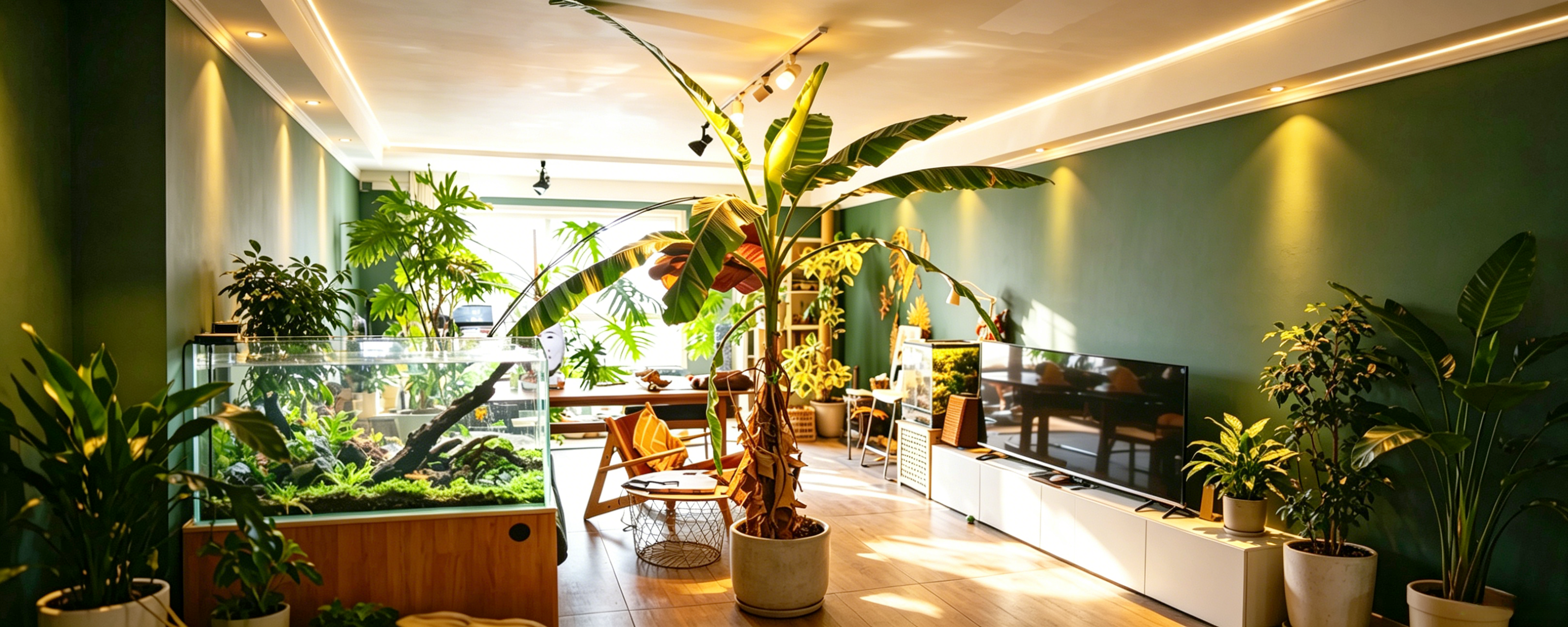
Two years ago, I decided it was a great idea to bring home an indoor banana plant. Not a pothos. Not a snake plant. No. I went straight for the oversized, slightly dramatic tropical diva.
If this plant survived, I told myself, I could probably survive anything too.
That was the beginning of our ongoing story: part gardening, part comedy, part relationship therapy.
The Honeymoon Phase: Too Much Love, Too Much Water
Like many beginners, I equated “care” with “watering constantly.”
The plant disagreed.
At first, everything looked fine—big green leaves, fast growth. Then the edges started to yellow, and I began to understand a fundamental truth of banana plants:
They love moisture in the air, not in their shoes.
I was drowning it with kindness. Literally.
Once I stopped overwatering and removed the tray full of stagnant water, my banana plant stopped acting like it was filing a complaint.
🌿Lesson #1:
If the soil feels wet, put the watering can down and walk away.
The Growth Spurt: Light, Space, and the Plant That Thinks It’s in Charge
Banana plants grow like they’re being timed.
One day you admire a rolled leaf; the next day it’s a fully expanded solar panel.
During this period, I learned that my plant had strong opinions:
- It wanted more space.
- It wanted more light.
- And it definitely wanted me to adjust to its schedule, not the other way around.
I moved it around the room until it found its “spot.” When it was happy, it grew so fast I could almost hear it.
The Drama: Crispy Leaves, Sudden Tantrums, and My Ongoing Confusion

The photo I’m submitting makes it clear: my banana plant is beautiful at the top… and an absolute disaster at the bottom.
- Some leaves dried overnight.
- Some folded weirdly.
- Some gave up before even trying.
At first, I thought I was doing something wrong. Eventually I learned the truth:
Banana plants always look a bit like they’re going through something emotionally.
And honestly? Same.
I now remove dry leaves without panicking. They’re not signs of failure; they’re just the plant shedding old baggage.
Light: The Moment Everything Changed
The biggest breakthrough came when I moved the plant to a brighter spot. Not harsher sun—just steady, abundant light all day. It transformed the plant almost instantly.
Before that, it survived.
After that, it actually lived.
🌿Lesson #2:
Light isn’t optional; it’s the main ingredient.
If your banana plant looks tired, unmotivated, or slightly depressed, it probably needs more brightness, not more water.
Watering, Humidity, and the Delicate Balance of Not Messing Up
I used to think “tropical plant” meant “water it daily.”
Nope.
Here’s the formula that finally works for me:
- Water deeply, then forget about it for a week or more.
- Keep humidity in the environment, not in the soil.
- Give it airflow so new leaves don’t rot before they open.
It’s a plant that prefers stability over pampering.
What This Plant Has Taught Me (Besides Patience)
Caring for this banana plant changed how I approach all indoor plants. Instead of following strict rules, I started observing:
- Why does the leaf look like that?
- Why is it drooping today?
- What changed in its light or temperature?
And slowly, I realized this plant wasn’t just growing—it was teaching me to pay attention, adjust, and not stress when things aren’t perfect.
🌿Lesson #3:
A banana plant is proof that growth can look messy and still be progress.

My Current Care Routine (for Anyone Who Wants the Practical Stuff)
Light: Bright, all day, no harsh midday sun.
Watering: Every 6–10 days depending on season; let the top layer of soil dry first.
Soil: Airy mix with plenty of drainage.
Pruning: Remove crispy leaves with confidence; it helps.
Pot: Big enough for root comfort but not oversized.
Maintenance: Gentle airflow to avoid damp, stuck leaves.
Nothing fancy. Just consistency.
Why I’m Sharing This Story
Because too often plant stories focus on perfection: glossy leaves, ideal lighting, flawless routines.
This banana plant isn’t perfect.
It’s dramatic, occasionally chaotic, and surprisingly demanding.
But it’s also a reminder that plants don’t need perfection to thrive—just attention, patience, and a sense of humor.
And honestly, that applies to most of us too.
Share:
The Ultimate Guide to Indoor Grow Lights: Real Home Setup & An Honest Comparison
A Closer Look at the Sansi 100W Tall Standing Grow Light