

Author: Sven Nardten Instagram:@plandts
A Tiny Beginning
There is something grounding about creating a quiet, natural corner in the middle of a busy digital world. My office jungle never started as a grand plan. It grew slowly, leaf by leaf, through curiosity, small experiments, and the thrill of discovering what works. It all began just over a year ago with a sustainability box containing a few Philodendrons, an Alocasia and an Anthurium. I still have these plants, and they have already grown into beautiful, mature specimens.
Even in those early days, I realized how quickly a small plant could transform with the right attention. Every leaf seemed to teach me something new, and I found myself eagerly following their subtle changes day by day.

First Steps in a Cabinet
A few weeks later, I found a secondhand IKEA cabinet, already partially set up as a mini greenhouse. With some low-cost LED lights and basic tools, I was ready to start. The black back panel made the leaves pop and turned the cabinet into a small, vibrant sanctuary.
Filling it felt like solving a puzzle. I shopped carefully, setting a budget per plant and browsing online marketplaces and plant communities. The key was keeping it simple—one type of substrate, one type of plant food, no complicated chemistry. Watching tiny leaves unfold in this controlled environment was addictive, and each small success encouraged me to keep going.

When Plants Outgrow Their Space
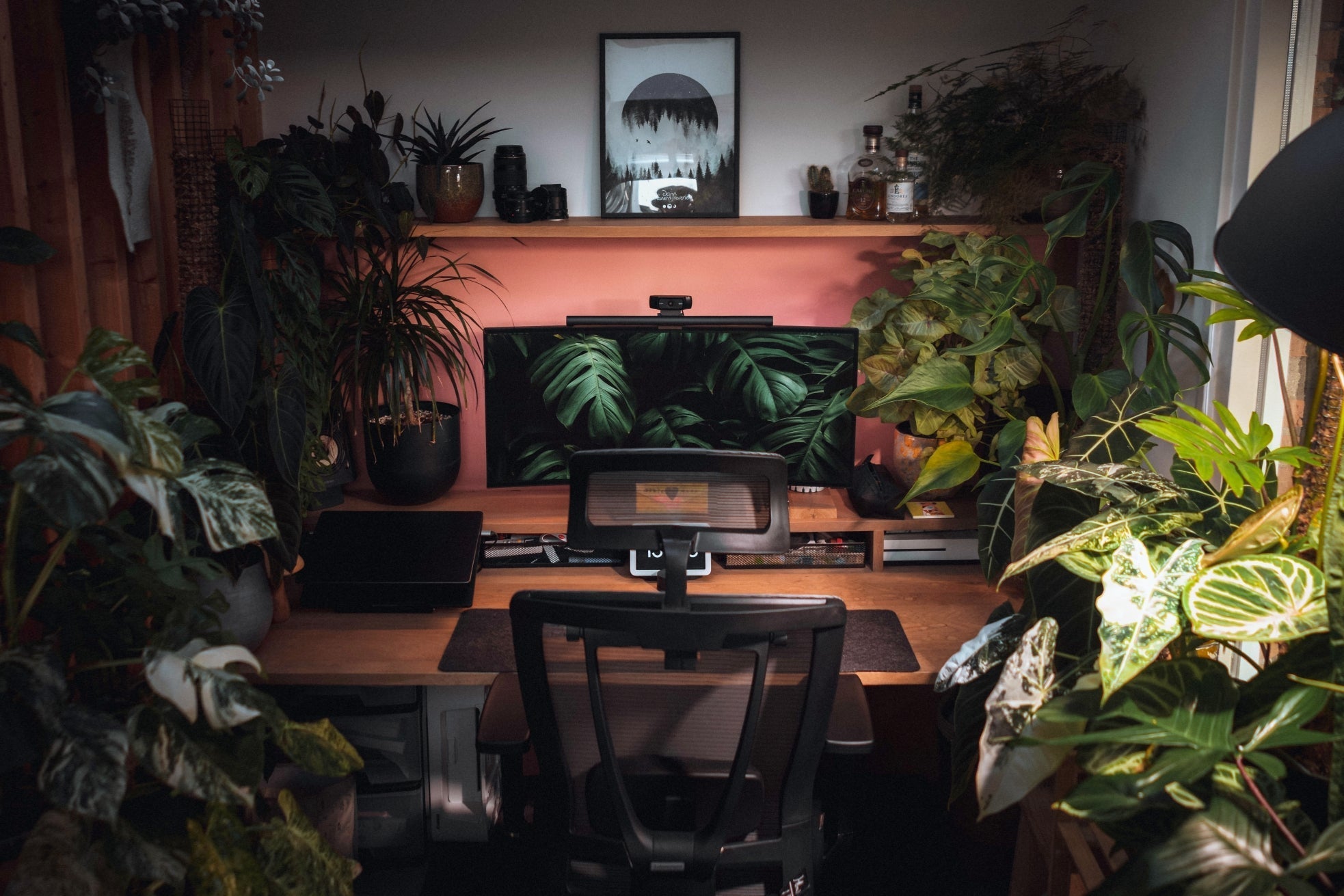
Of course, plants grow faster than your plans. Soon, the cabinet started feeling small. Leaves stretched beyond its boundaries, and some plants were clearly ready for bigger surroundings. That was when the office jungle began to take shape. My office, designed two years earlier to feel warm, calm, and grounded, suddenly became the perfect new home for my collection. Solid oak custom furniture, a skylight above, and a sense of calm made it ready for a jungle.

Transitioning the plants wasn’t instant. I opened the cabinet daily during the spring to gently acclimate them to ambient conditions. Grouping them created a microclimate that naturally boosted humidity, and when more plants moved outside the cabinet, I added a humidifier to maintain stability for the more sensitive species. It was fascinating to see how a little planning and observation could make such a difference.

As the collection expanded, the office started to take on a character of its own. Some plants naturally settled into brighter spots near the skylight, while others thrived in softer, diffused light. The contrast between large, structural foliage and the warm tones of the oak furniture created a balance that felt intentional rather than crowded. It became clear that the space shaped the plants just as much as the plants shaped the space.

Balancing Aesthetic and Function
As the setup grew beyond the cabinet, I gradually learned how important it is to balance function with aesthetics. I wanted the plants to thrive, but I also wanted the space to feel calm, intentional and visually cohesive. That meant hiding cables where possible, choosing pots and accessories that matched the atmosphere, and placing plants in a way that created a natural flow through the room. Over time, shaping this balance became part of the joy. It wasn’t just about growing plants, but about creating an environment that felt pleasant and inspiring to spend time in.

Facing Winter Light
Autumn brought a new challenge. Shorter days in the Netherlands meant less natural light, and some plants started to show it. The Monstera Burle Marx Flame produced its first fall leaf with less fenestration than the previous ones. Everything else—water, temperature, care—was the same. The difference was light.

To support them without compromising the office’s aesthetic, I added a subtle but powerful grow light. Using a standing lamp I already had, I replaced its bulb with a SANSI 40W LED Grow Light Bulb with a remote. Within weeks, the Burle Marx Flame produced a new leaf with full fenestration, and other plants responded as well. Small adjustments made a visible difference, proving that even subtle changes can have a big impact.

Keeping It Simple
One of the greatest lessons I’ve learned is that indoor growing doesn’t have to be complicated. Consistency, observation, and a bit of common sense go further than expensive tools or complex routines. My setup relies on affordable tools, DIY moss poles, a single type of fertilizer, and basic grow lights. They work, and that keeps the hobby enjoyable rather than overwhelming.
Simplicity also extends to sharing my plants. Propagating cuttings and selling them started almost by accident. People often come for one plant and leave with several. Watching their excitement, answering questions, and sharing knowledge has created a sense of community that I didn’t expect when I first began. It’s rewarding in ways that go beyond the plants themselves.

A Calm and Inspiring Space
The office jungle is designed to feel warm, calm, and inspiring—a quiet contrast to screens and notifications. Every plant, every leaf, and every carefully considered placement contributes to the sense of balance. Light, both natural and supplemental, supports the space without dominating it. Subtle interventions ensure the plants thrive while maintaining the calm aesthetic that makes the office feel like a sanctuary.

A Journey Still Growing
From a small cabinet to a thriving office jungle, the growth has been gradual, intentional, and deeply rewarding. Each new leaf, every adaptation, and all the small daily observations keep the space dynamic. The office jungle is not a final destination but a living, evolving environment. It reminds me that growth, whether for plants or for ourselves, often happens quietly and steadily.
This journey has shown me that a simple approach, attention, and a little strategic support can create something lush, inspiring, and personal. My office jungle continues to grow, and as long as curiosity and observation guide it, I know it will remain a calm, green haven for years to come.

Share:
The 2025 Christmas Gift Guide: Thoughtful LED Light Gifts for Everyone on Your List
New Year, New Glow: The 2026 Guide to LED Grow Lights for Your Indoor Plants
2 comments
A well-structured journey. I appreciate the focus on the actual results of using LED support in office spaces. It’s a great example of how to scale an indoor garden effectively.
My plant hobby has definitely grown from quite a few plants to a jungle. I have two plant rooms and 3 IKEA cabinets. My house is dark so I use alot of grow lights. I absolutely love how well my plants in the plant rooms grow with my Sansi light bulbs in the ceiling fixture.