

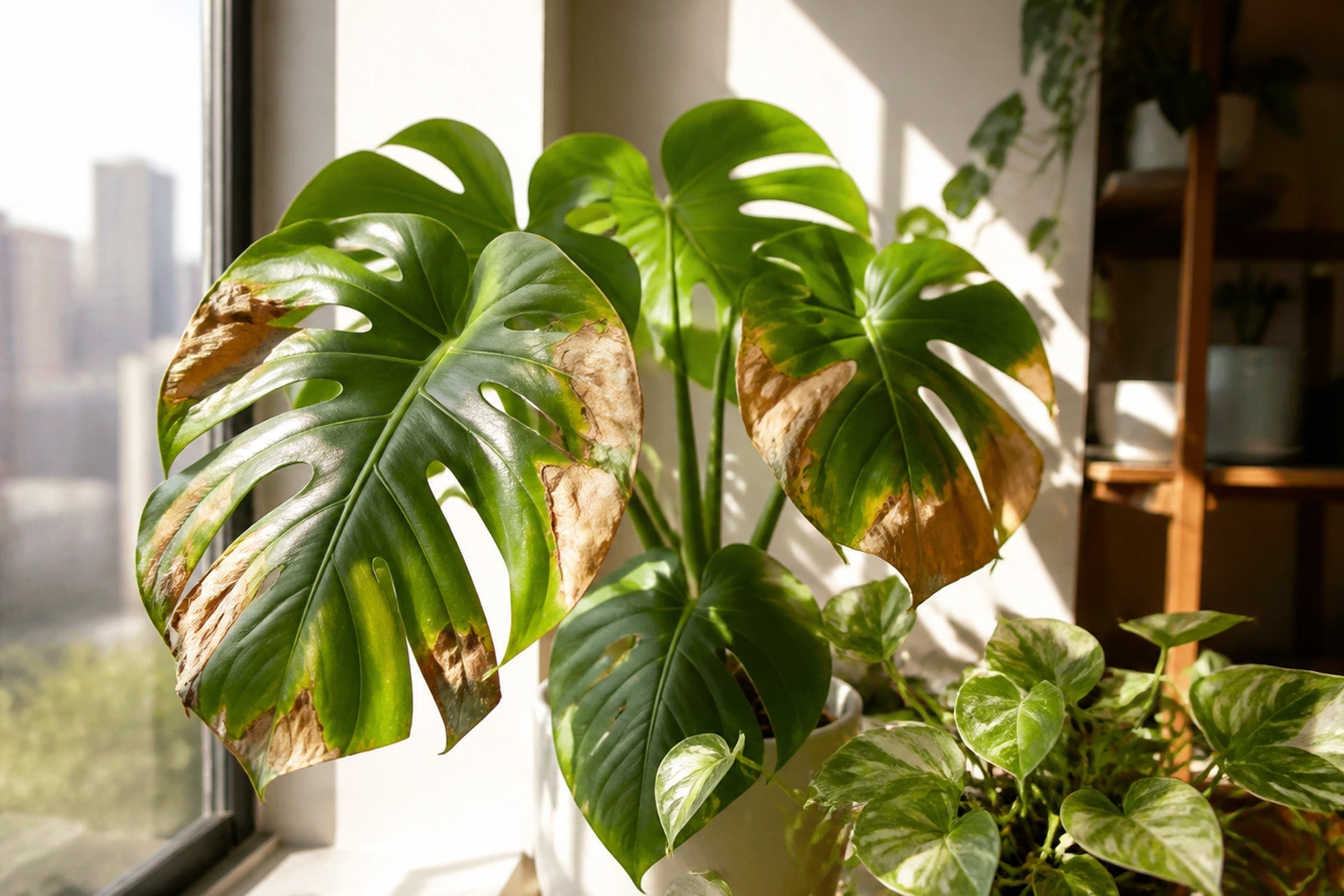
The sweltering heat of July and August is gradually coming to an end, but the condition of houseplants is getting worse and worse. Large patches are appearing on the leaves, along with scorched edges, and in some cases, the leaves are even wilting and drying out—these are all aftereffects of sunburn caused by the intense summer sunlight. Once leaf cells are scorched by strong light, they continue to suffer damage; if timely, targeted remedies and proper care aren’t provided, the plants will quickly decline. Today, we’ve put together a comprehensive guide to identifying sunburn in plants and providing first aid, so you can easily rescue your sun-damaged houseplants.
Accurate Identification—What Level of Sunburn Has Your Plant Suffered?
Sunburn in plants is classified into three levels: mild, moderate, and severe. The remedies for these different levels of damage vary significantly, so it is crucial to assess the condition before taking action.

-
Mild sunburn: Can heal completely without the need for excessive intervention
Key Characteristics: Scattered white or grayish-white discolored patches appear on the leaf surface, or the leaf edges may show slight scorching. The leaves remain firm and plump overall, and the plant exhibits normal growth. Only the surface layer of the leaf tissue has suffered minor sunburn from intense light. By promptly adjusting the growing conditions, the plant can quickly recover without the need for significant pruning.
-
Moderate sunburn: Treat promptly to prevent further worsening
Key Characteristics: The leaves develop brown, scorched edges and become dry and brittle; the entire leaf curls slightly and droops; some leaves become hard and shriveled in certain areas; soil moisture levels are normal, but the plant appears wilted. At this stage, the damaged area on the leaves is expanding, and the cells in the scorched areas have already died. If not treated promptly, the brown, scorched edges will continue to spread inward, depleting the plant’s nutrients and leading to disease.
-
Severe sunburn: The damage is irreversible; take immediate action to minimize the damage and save your life.
Key Characteristics: Large areas of the leaves are withered and brittle, or the entire leaf has turned white, translucent, and watery; they crumble or become mushy upon touch, and the stems of some plants have become limp. At this stage, the leaves cannot regain their green color; the only option is to remove them completely to minimize damage and prevent rot from spreading to the entire plant.
First Aid for Sunburn—Three Quick Steps to Minimize Damage and Cool the Skin
-
Step 1: Immediately move the plant away from bright light.
Immediately remove the plant from the south-facing window or areas on the balcony exposed to direct sunlight, and place it in a well-ventilated, shaded spot without direct sunlight to prevent continued damage to the leaves from intense light and stop the damage from worsening.

-
Step 2: Carefully prune damaged leaves.
For mild sunburn, leave the leaves intact; no pruning is necessary. For moderate sunburn, trim away the dried, scorched edges and severely curled damaged areas, leaving the healthy green leaf tissue intact. For severe sunburn, cut off leaves that are completely dried out and translucent. When pruning, ensure the cut surfaces are smooth to minimize the risk of infection.

-
Step 3: Adjust your watering schedule appropriately.
After sunburn, a plant’s leaves lose much of their ability to retain moisture, and the roots become less efficient at absorbing water. Avoid overwatering; instead, water in small amounts but more frequently to prevent waterlogging and root rot. Pruned leaves are more susceptible to disease, so do not spray water on them at this time.

Lighting Strategies After Sunburn—“Light Exposure Guidelines” for the Recovery Period

- Common Care Mistake: After a plant suffers sunburn, it is immediately placed in a dark, light-free area to rest. Since plant growth depends on photosynthesis, completely shielding the plant from light after leaf damage prevents healthy leaves from synthesizing nutrients. As a result, the plant draws on its own reserves to survive, becoming weaker over time.
- Lighting Plan for the Recovery Period: Natural light levels are unpredictable; strong afternoon sunlight can easily cause secondary burns, while insufficient light on cloudy days can slow down recovery. The SANSI 100W Tall Standing Grow Light, however, allows you to precisely control light intensity with 5 adjustable brightness levels. You can start with low brightness and short durations to support photosynthesis while avoiding the stress caused by intense light, giving you “active control” over your plants’ recovery process.
- Tips for use during the recovery period: Start by using 20% low-intensity soft light for 4-6 hours daily. Once the leaves have stabilized and show no signs of new sunburn, gradually adjust the light intensity and duration to help the plant slowly regain its vitality, perfectly solving the problem of unpredictability associated with natural light care.

How Long Does It Take for New Leaves to Grow?
Be patient with sun-scorched plants and watch for fresh, green shoots to appear in the leaf axils or at the base of the stem. If the undamaged older leaves stand upright again and regain their luster, it means your plant has recovered. If there is no sign of life after more than a month, check the root system—sun-induced root rot may have set in, in which case you’ll need to remove the plant from its pot and trim the roots.
|
Plant Type |
Time |
Features |
|
Fast-Recovering Plants (Pothos, Calathea, Snake Plant, Monstera) |
2-3 weeks |
Active growth points and strong adaptability |
|
Medium-Growth Recovery Types (Fiddle-Leaf Fig, Rubber Tree, Cactus) |
4-6weeks |
It needs to accumulate enough energy before it can sprout. |
|
Slow-Growing Types (Succulents, Cacti, Globe Plants) |
6-8 weeks or even longer |
They have a slow metabolism. |
Prevent Further Damage! Long-Term Tips to Prevent Sunburn Recurrence
Plants that have suffered sunburn have damaged leaf barriers and significantly reduced resistance. They are more sensitive to strong light and high temperatures than healthy green plants, and even the slightest carelessness can lead to secondary sunburn, so extra care is required.
- Avoid sudden exposure to direct sunlight: If you plan to move the plant back to its original window spot, use a shade net or sheer curtain for a two-week transition period, gradually increasing the duration of light exposure and avoiding direct midday sunlight as much as possible.
- Maintain a stable lighting environment: As summer transitions to fall, light conditions are unpredictable—with blindingly bright sunlight on sunny days and insufficient light on cloudy days—which can easily throw plant care off balance. Grow lights allow you to flexibly adjust the light intensity based on the weather and the plant’s condition, providing stable and gentle lighting throughout and preventing damage caused by the fluctuating intensity of natural light.
- Optimize the growing environment: Maintain good ventilation in the growing area. During hot weather, appropriately increase humidity to lower temperatures. Stop fertilizing and wait for the root system to recover before gradually applying a dilute liquid fertilizer.
Conclusion
Sunburn isn’t a terminal condition. With proper first aid and scientifically tailored lighting, most plants can grow brand-new leaves within 1-2 months. The SANSI 100W Tall Standing Grow Light is like a “light therapy prescription” custom-made for sunburned plants: it provides a precisely tailored lighting solution for every stage of the plant’s recovery.
Partager:
This One Hanging Grow Light Fixed My Dark Corner & 16 Plants
The Autumn Shift: Why Your Houseplants Are Giving You Side-Eye (And How to Win Back Their Favor)