

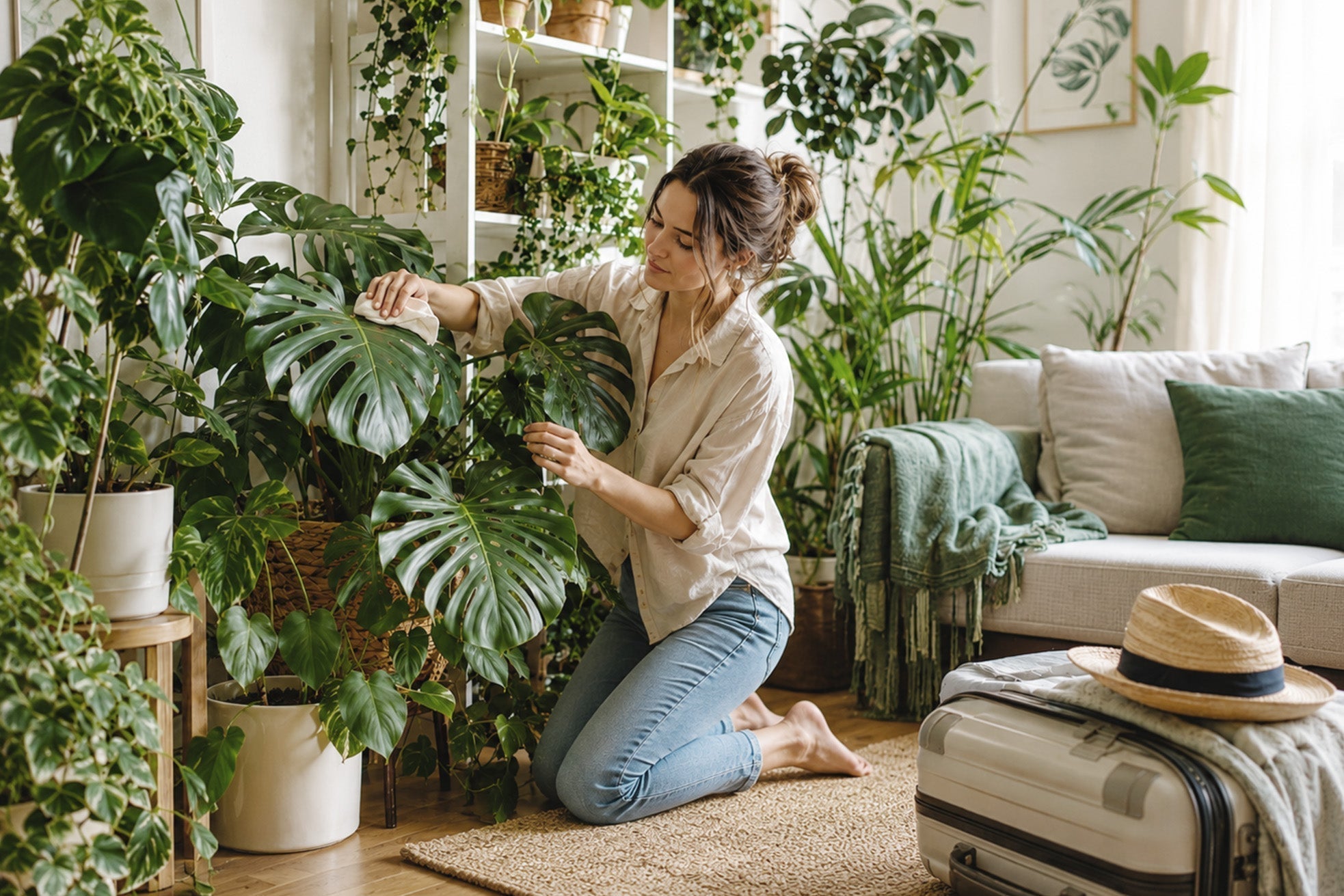
July is the peak vacation season, but for plant lovers, the question of "what to do with your plants while you're away" is even more stressful than booking a flight. The mortality rate of plants during the summer—due to lack of water or insufficient light—skyrockets after long vacations.
Don't worry, just as pets have automatic feeders, plants have their own "hands-off" care solutions. This article will provide you with a set of scientific, hassle-free solutions—for both short-term (3–5 days) and long-term (1–2 weeks) absences—that don't rely on your neighbors.
Short-term absence from home (3–5 days): The "Lazy Person's" Microclimate Method for Creating a Stable Care Environment
Short trips lasting 3–5 days are generally within the tolerance range of most plants; by following these simple tips, you can ensure your plants get through them just fine.
-
The Ultimate Watering Technique: The Soak-and-Drain Method
Before leaving home for vacation, place the flowerpot in a deep tray filled with water so that the water level reaches one-third of the pot's height. The soil will slowly absorb water through the drainage holes at the bottom of the pot, providing a continuous supply to the roots. Soaking the pot not only thoroughly moistens the soil and increases water retention but also prevents water from pooling on the soil surface and causing root rot.
-
DIY Humidity Tray: Continuously locks in moisture to prevent drying out
Find a shallow tray, line it with a layer of small pebbles or expanded clay pellets, and add water until it just covers the bottom of the pebbles. Place the flowerpot on top of the pebbles. As the water evaporates, it will create a microenvironment of high humidity around the plant, slowing down transpiration and preventing the potting soil from drying out too quickly.

-
Grouping Plants: Creating a "Mutually Beneficial Microclimate"
Move the plants away from areas with direct sunlight, such as south-facing balconies, and group them together under plant grow lights or in areas with diffused light to create a cluster of greenery. The moisture released by the plants through transpiration can increase local humidity, slowing the evaporation rate by more than 30% compared to when they are placed individually.

Extended Absence (1–2 Weeks): Smart Automation Solutions for Unattended Maintenance
If you'll be away for 1–2 weeks, you'll need to address not only watering but also lighting: leaving your plants on the balcony in direct sunlight will cause them to wilt and dehydrate, while keeping the curtains closed will result in insufficient light and leggy growth. Smart plant grow lights with timers and automatic watering systems are the most reliable options for long-term care.
-
Automatic watering system
A homemade humidity tray may only provide enough water for your plants for 3–5 days. If you plan to be away for more than a week, you can purchase a timed drip irrigation system to use with the Sansi plant grow lights. This will address both lighting and humidity—the two key issues—and perfectly support a 1–2-week absence from home.
-
Automated Lighting
Top Pick: Sansi 100W Floor-Standing Plant Light
Features: Built-in timer with one-touch settings for "6H/8H/12H" cycles. Once plugged in, it automatically turns on and off at set times each day.
Advantages: No need to purchase a separate timer outlet; plug-and-play. Ideal for households with many plants, including large potted plants, allowing for centralized supplemental lighting.

The Next Level: Sansi 40W App-Controlled Smart Downlight
Features: Supports remote control via a mobile app; provides even, soft lighting; suitable for most indoor foliage and flowering plants.
Benefits: You can customize lighting schedules based on how long you'll be away and the type of plants you have. Whether you're going on a short trip or a long one—even if you're thousands of miles away at the beach—you can remotely schedule, turn on or off, and adjust the brightness at any time.

Hiring Help vs. Automated Equipment: An In-Depth Comparison of Holiday Maintenance Methods
-
Ask a friend to come over and help take care of things
Disadvantages: High uncertainty and low tolerance for error. Most people aren't avid gardeners, so it's difficult for them to control the amount and frequency of watering; light exposure is completely uncontrollable, and long-term fluctuations in natural light can affect the plants' health; friends or neighbors may not have the time to provide frequent, regular care.
Advantages: No need to purchase equipment, and the cost is low for short, occasional trips.
-
Plant Lights + Smart Lighting for Automated Care
Disadvantages: Requires a one-time investment; each light costs anywhere from several dozen to several hundred yuan.
Advantages: Maximum stability with zero human intervention. Timed lighting precisely replicates the light cycles plants need, unaffected by weather, the environment, or human error; a one-time installation allows for long-term, repeated use, accommodating multiple annual vacations; smart app control enables remote adjustment of lighting duration and brightness at any time to suit the growth needs of different seasons and plants; it completely eliminates the burden of social obligations, ensuring standardized and controllable care results.
Conclusion
If you love plants and travel frequently, investing in an automated lighting system is far more cost-effective and reliable than asking a friend for help every time you go on vacation. With a smart, timer-controlled plant lighting system, your plants will stay lush and green all year round, and you'll be greeted by a house full of life every time you return home.
Partager:
A Closer Look at the Sansi 100W Tall Standing Grow Light
Why "Washing" Your Plants' Leaves is the Secret to Maximizing Your Grow Lights